


How to sell fine art prints online: sizes, files, mats and frames

To sell fine art prints online, you need four things: a print that is worth the name, a file large enough for the sizes you offer, listings that tell buyers exactly what they get, and a place to sell where people can pay. Print on demand takes care of printing and shipping, so each print is made only after someone orders it.
This guide covers each step for prints on paper: what makes a print "fine art", which sizes to offer, how big your file must be, how mats and frames work, how to describe the print, and where to sell it.
What makes a print a fine art print
"Fine art print" is not a protected term, so it pays to know what buyers usually mean by it.
- The print method. Most fine art prints are giclée prints, made on a large-format inkjet printer with many ink colors. Giclée gives smooth gradients and fine detail. For a closer look, read giclée printing explained.
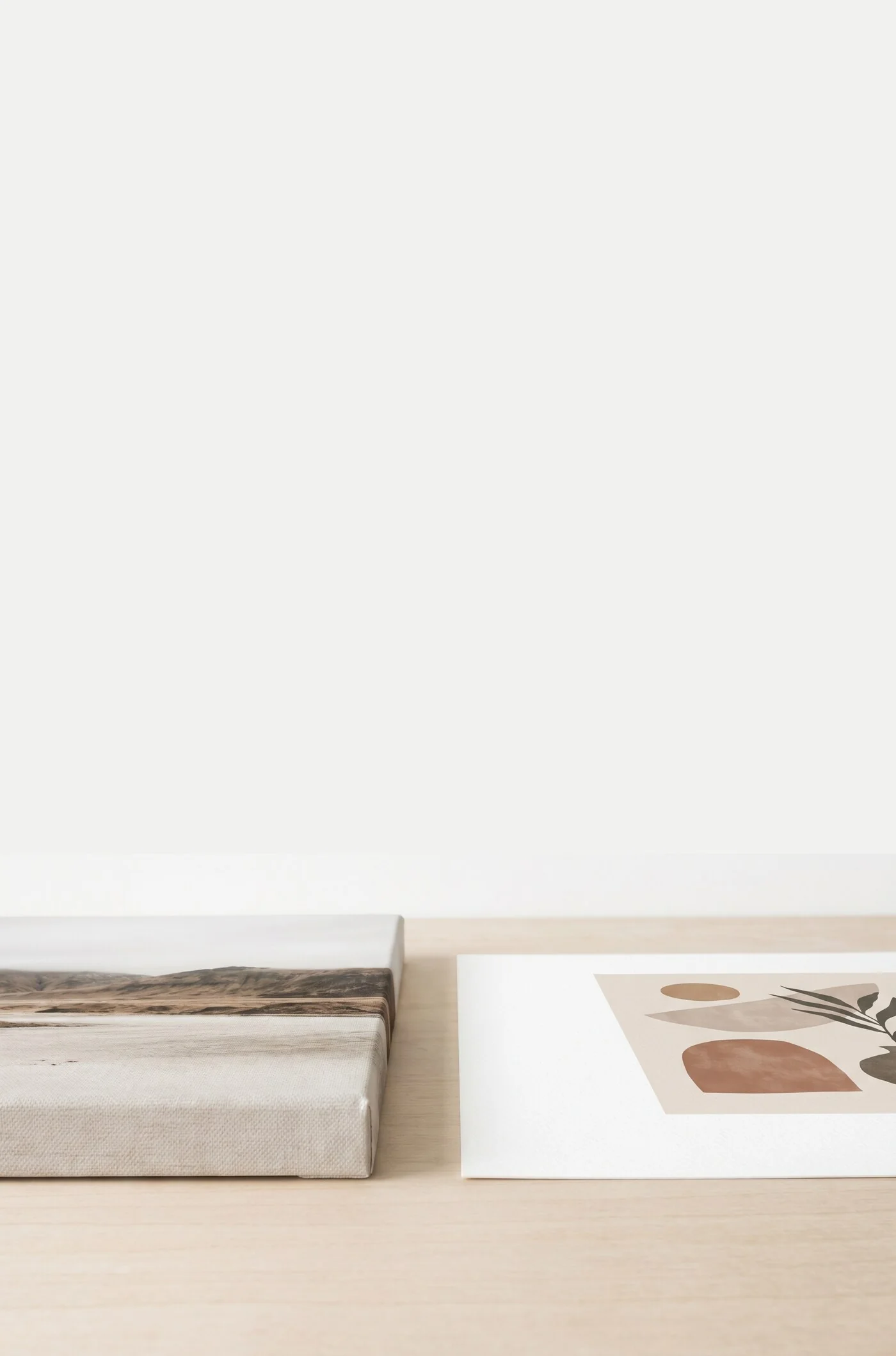
- The paper. A heavy matte paper, not a thin glossy poster sheet. Weight is given in gsm. A matte surface shows detail without glare and suits drawings, watercolors, illustration and photography.
- The handling. The print is trimmed, packed flat or rolled with care, and arrives without creases.
Be careful with longevity claims. Words like "archival" and "museum quality" only mean something if you can back them. State what you know, such as the paper weight, the finish and the print method, and avoid promising a number of years you cannot prove.
Which sizes to offer
Paper prints come in standard sizes, and buyers look for those because frames are sold in them.
Metric sizes, common in Europe: A5, A4, A3, A2 and A1, plus 30 x 40, 40 x 50, 50 x 70, 70 x 100 and 100 x 140 cm, and squares such as 50 x 50, 70 x 70 and 100 x 100 cm.
Inch sizes, common in the US and the UK: 8 x 12, 12 x 16, 18 x 24 and 24 x 36 in.
The shape of your artwork limits which sizes you can sell without cropping. A painting with the proportions of A4 fits every A size. A 3:4 painting fits 30 x 40 cm and 12 x 16 in. If your work is a shape no standard size matches, you can crop it or print it whole on a white sheet with a border.
Start with three or four sizes across a price range: a small one under 30 cm for impulse buyers, a middle one around 50 x 70 cm, and one large statement size. For help picking, see what size art goes above a couch.
How big your file needs to be
Fine art paper is viewed up close, so it looks best at 300 DPI at the printed size. The formula is pixels = cm / 2.54 x 300, or inches x 300.
| Print size | Pixels at 300 DPI |
|---|---|
| A5 (14.8 x 21 cm) | 1748 x 2480 |
| A4 (21 x 29.7 cm) | 2480 x 3508 |
| A3 (29.7 x 42 cm) | 3508 x 4961 |
| 30 x 40 cm | 3543 x 4724 |
| A2 (42 x 59.4 cm) | 4961 x 7016 |
| 50 x 70 cm | 5906 x 8268 |
| A1 (59.4 x 84.1 cm) | 7016 x 9933 |
| 70 x 100 cm | 8268 x 11811 |
| 12 x 16 in | 3600 x 4800 |
| 18 x 24 in | 5400 x 7200 |
| 24 x 36 in | 7200 x 10800 |
A 24 megapixel camera gives about 6000 x 4000 pixels. If the painting fills the frame, that covers 30 x 40 cm at 300 DPI but falls short for 50 x 70 cm. Below 300 DPI a print does not suddenly fail, but fine lines soften.
Export in sRGB, and check the colors by printing one before you sell. More on resolution in DPI vs pixels, and on capturing the original in how to photograph artwork for print.
Mats: printed border or real matboard
A mat (passepartout) is the plain border between the artwork and the frame. It gives the work room to breathe and makes a small print look more finished. On a print-on-demand paper print it works in one of two ways.
On an unframed print, the mat is printed into the sheet as a colored border around the artwork. The buyer receives one sheet with a margin. That margin is the natural place to sign and number a print.
In a frame, the mat is a real matboard cut with a window, sitting between the print and the glazing.
Either way, plan for the edges. In a frame, the mat window is slightly smaller than the print so the mat can hold it flat. It covers about 5 mm of every edge, and a frame without a mat covers the edge too. Keep signatures, titles and important detail at least 1 cm from the edge of the artwork.
Frames
Many buyers want a print they can hang the day it arrives. A framed option saves them a trip to a framing shop, which is why framed prints sell at a higher price.
What to look for in a framed print:
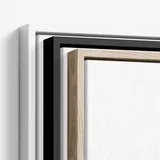
- Frame material and color. Wooden frames in a few neutral colors cover most interiors. A few brighter colors suit playful work.
- Glazing. Plexiglass is lighter than glass and less likely to break in transit.
- Hanging. The frame should arrive ready to hang.
Signing and editions
Signed prints and limited editions can justify a higher price, but they change how you work. A print shipped straight from the printer to the buyer never passes through your hands, so you cannot sign it.
There are two honest routes. Sell open editions printed on demand, unsigned, at a price that reflects that. Or order a limited edition to your own address, sign and number each sheet in the printed margin, and ship them yourself. The trade-offs are covered in open edition vs limited edition prints.
Listing photos and descriptions
Online, buyers cannot touch the paper. Your photos and text do that work.
Photos. Show the artwork flat and straight first, then in a room at its real size, then framed, then a detail shot. A room picture answers the question every buyer has: how big is it on my wall? How to make art mockups explains the options.
Description. State the facts buyers need, in this order:
- the size of the print and, if framed, that the size is the print and not the outside of the frame
- the paper: weight, finish and print method
- framed or unframed, and the frame color
- whether there is a mat or a printed border
- whether it is signed, and if it is an edition, how many
- how it ships: rolled or flat, framed ready to hang
How to price fine art prints
Add up what one sale costs you and put your profit on top: print cost, shipping you absorb, and platform and payment fees. Then compare your result with artists who sell similar work to a similar audience.
Prices should rise with size, and framed prints should cost clearly more than unframed. The full method with real print costs is in how to price art prints.
Sell your art with Printumo
Get started with selling your art as canvas and fine art prints
Where to sell fine art prints online
Your options fall into three groups:
- A marketplace such as Etsy, where buyers are already searching. You pay fees per listing and per sale, and you compete with many similar listings. See how to sell art on Etsy.
- Your own store on Shopify, Wix, Squarespace or WooCommerce, connected to a print-on-demand service. You control everything but pay for a plan or hosting, and you bring the traffic.
- A free hosted shop with printing built in. No monthly cost, your own prices, and the prints are made and shipped for you.
Many artists use a marketplace for discovery and their own shop for followers and returning buyers. The full comparison is in the best website to sell art prints.
Where Printumo fits
Printumo is a print-on-demand service for wall art. You upload your artwork once, and each fine art paper or canvas print is made when it is ordered and shipped to your buyer in neutral, unbranded packaging.
For fine art paper, that means:
- Paper. Natural matte fine art paper (230 gsm in Europe), giclée printed.
- Sizes. A5 to A1, 30 x 40 to 100 x 140 cm, squares, and 8 x 12 to 24 x 36 in. Buyers in the UK and the US see inch sizes.
- Mats in 11 colors, printed as a border on unframed prints and cut as a real mat in framed ones.
- Wooden frames in 14 colors with a plexiglass front, ready to hang.
- File checks. Each size shows a quality dot based on your file's pixels. If some sizes fall short, the AI upscaler can rebuild the artwork with up to 4 times the pixels in each direction when a print is ordered, at no extra cost on your first 3 products.
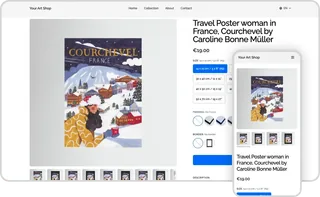
The simplest place to sell is Printumo Shop, a free hosted webshop for artists. There is no monthly fee and 0% commission. Printumo bills only the printing and shipping of each print sold, and the payment provider's card fees apply. You can group your work into collections, and an own domain is available with Printumo+, the optional paid plan. If you already sell on Shopify, Etsy, WooCommerce, Wix or Squarespace, you can connect that store instead, or both.
An account is free and no subscription is needed. Before you list a print, order one for yourself to check paper, color and margins. There is 30% off the prints and frames in your first order when you place it within 48 hours of signing up.
Frequently asked questions
What is the difference between a fine art print and a poster?
A fine art print is usually a giclée print on a heavier matte paper, made in small numbers or one at a time. A poster is usually printed in bulk on thinner paper. The paper, the print method and the price all differ.
What resolution do I need to sell fine art prints?
Aim for 300 DPI at the printed size. A 50 x 70 cm print needs about 5906 x 8268 pixels, and an A4 print about 2480 x 3508.
Should I sell fine art prints framed or unframed?
Both sell, to different buyers. Unframed prints are cheaper to buy and ship, and suit buyers who already have a frame. Framed prints arrive ready to hang and sell at a higher price.
Can I sign prints that are printed on demand?
Not if they ship straight to the buyer. To sign prints, order them to your own address, sign them in the printed margin and ship them yourself.
Where is the best place to sell fine art prints online?
A marketplace brings buyers you do not have yet. Your own shop keeps more of each sale and the customer relationship. Many artists use one of each.