


Print on demand statistics and trends: the numbers with a source

Most lists of print on demand statistics repeat figures that nobody can trace back to a study. This page keeps only numbers with a named source, says when each was published, and links to it. Where we could not find a source for a popular claim, we left it out.
Here are the headline figures, checked in November 2026:
| Statistic | Figure | Source |
|---|---|---|
| Global print on demand market, 2025 | USD 10.8 billion | Grand View Research, 2026 |
| Projected market, 2026 | USD 13.1 billion | Grand View Research, 2026 |
| Projected market, 2033 | USD 57.5 billion | Grand View Research, 2026 |
| Projected annual growth, 2026 to 2033 | 23.6% a year | Grand View Research, 2026 |
| Largest region, 2025 | North America, 36.0% of revenue | Grand View Research, 2026 |
| Largest product segment, 2025 | Apparel, 39.5% of revenue | Grand View Research, 2026 |
| Fastest-growing product segment | Home décor, 24.5% a year | Grand View Research, 2026 |
| Etsy marketplace active buyers, Q4 2025 | 86.5 million, down 3.4% on a year earlier | Etsy, February 2026 |
| Etsy marketplace active sellers, Q4 2025 | 5.6 million, down 1.5% on a year earlier | Etsy, February 2026 |
| Global art market sales, 2025 | USD 59.6 billion, up 4% | Art Basel and UBS, 2026 |
| Online-only art sales, 2025 | USD 9.2 billion, 15% of the art market | Art Basel and UBS, 2026 |
The rest of this page explains each figure and what it means if you sell wall art.
How big is the print on demand market?
Grand View Research valued the global print on demand market at USD 10.8 billion in 2025. It projects USD 13.1 billion in 2026 and USD 57.5 billion by 2033, which is growth of 23.6% a year from 2026 to 2033. The report was published in June 2026 and last updated in October 2026.
Two cautions before you quote these numbers:
- Forecasts are estimates. Different research firms define the market differently, and their figures can be far apart. Even one firm's numbers move between editions of the same report.
- A long forecast is a direction, not a promise. Treat the 2033 figure as "analysts expect strong growth", not as a fact about the future.
The size of the market tells you there is room to sell. It does not tell you how much one artist will sell, which depends on the work, the prices and the visitors you bring.
Which products lead, and which grow fastest?
Apparel is still the biggest category. In the same Grand View Research report it accounted for 39.5% of print on demand revenue in 2025.
Home décor is the segment the report expects to grow fastest, at 24.5% a year. Wall art sits in home décor, so this is the figure that matters most for artists who sell prints and canvases.
North America was the largest region, with 36.0% of revenue in 2025.
How many people buy on Etsy?
Etsy is the marketplace many artists start on, so its numbers are a useful check on the "everyone is buying online" story. In its results for the fourth quarter of 2025, published on 19 February 2026, Etsy reported for its marketplace:
- 86.5 million active buyers, down 3.4% on a year earlier and nearly flat on the quarter before.
- 5.6 million active sellers, down 1.5% on a year earlier.
- Gross merchandise sales per active buyer of USD 121 over the previous twelve months.
So the biggest marketplace for handmade and creative goods is large and stable, but not growing its buyer count. That is a reason not to rely on one marketplace alone.
How much art is sold online?
The Art Basel and UBS Art Market Report 2026 estimates that global art sales rose 4% to USD 59.6 billion in 2025. Online-only sales fell to USD 9.2 billion, their lowest level since 2019, and made up 15% of the market.
This report covers original art sold by dealers and auction houses, not prints from print on demand services, so it measures a different market. It is still worth knowing two of its findings. Online-only sales are concentrated at mid and lower price levels, and the report calls online "a key channel to source new buyers". Affordable work is exactly where online selling does well.
Trends in print on demand for artists
These trends come from what we see in the industry. We have not put numbers on them, because we could not find a reliable source for one.
Home décor and wall art are growing
The fastest-growing segment in the Grand View Research report is home décor. For an artist, this is the strongest argument for selling prints and canvases instead of putting art on t-shirts and mugs.
Buyers want something personal
Buyers look for art that feels chosen, not mass-produced: a local landscape, a pet portrait, a print signed by the artist. Print on demand suits this because a design can be offered without a minimum order, and niche work does not need to sell in volume to be worth listing.
Own shops alongside marketplaces
Marketplaces bring buyers but take fees and keep the customer. More artists run their own shop beside a marketplace, so returning buyers and followers buy where the artist keeps more of each sale. The Etsy figures above show why: the largest marketplace is not growing its buyer base, so your own audience matters more.
AI tools in the workflow
AI is now a normal part of many artists' workflow, mostly in the supporting tasks: enlarging a small file so it prints sharply at large sizes, and putting artwork into room pictures. The art itself is still what buyers choose.
Less waste
A print that is made only after it is ordered never ends up in a box of unsold stock. For buyers who care about waste, that is a point worth making in your shop.
Statistics we left out
Some numbers appear on many print on demand pages without a source. We did not find a study behind claims such as "over 60% of customers prefer buying from small creators" or "most print on demand orders arrive in 5 to 7 days", so they are not on this page. Delivery times in particular depend on the product, the production site and the buyer's country.
If you quote a statistic in your own marketing, link to the study it comes from. A number without a source can hurt your credibility more than having no number at all.
Sell your art with Printumo
Get started with selling your art as canvas and fine art prints
What this means if you sell wall art
- There is room to sell. A growing home décor segment means more people buying art for their walls.
- The art market rewards the middle. Online sales are strongest at lower and mid prices, which is where prints sit.
- Do not depend on one channel. Pair a marketplace for discovery with a shop of your own.
- Your results depend on you. Market size is not a sales forecast for any one artist. Clear collections, fair prices and steady promotion matter more.
For the practical side, read your first print on demand business and how to price art prints.
Where Printumo fits
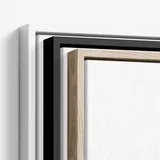
Printumo is a print on demand service for wall art only: fine art paper prints and canvas prints, unframed or in wooden frames. You upload your artwork and set your prices, and each print is made and shipped to the buyer when it is ordered. An account is free, with no subscription needed, and you pay the print and shipping cost per order.
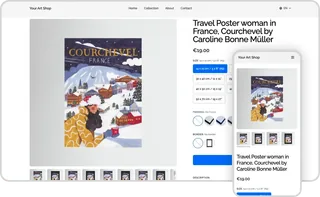
You can sell through Printumo Shop, a free hosted shop with no monthly fee and 0% commission, or connect Shopify, Etsy, WooCommerce, Wix or Squarespace. Many sellers do both. There is 30% off your first order when you place it within 48 hours of signing up, which is a good time to order a sample.
Frequently asked questions
How big is the print on demand industry?
Grand View Research valued the global print on demand market at USD 10.8 billion in 2025 and projects USD 57.5 billion by 2033. Other research firms publish different figures, because they define the market in different ways.
Is print on demand still growing?
Analysts expect it to. Grand View Research projects growth of 23.6% a year from 2026 to 2033, with home décor as the fastest-growing segment. These are forecasts, not guarantees.
Is print on demand oversaturated?
Popular niches on the big marketplaces are crowded, and Etsy's buyer count fell slightly in 2025. Artists with a recognizable style, a clear subject and their own audience are less exposed to that competition than sellers of generic designs.